

Uncategorized
UAE Vape Tax 2026: What Changed and How It May Affect Vape Prices
Sep
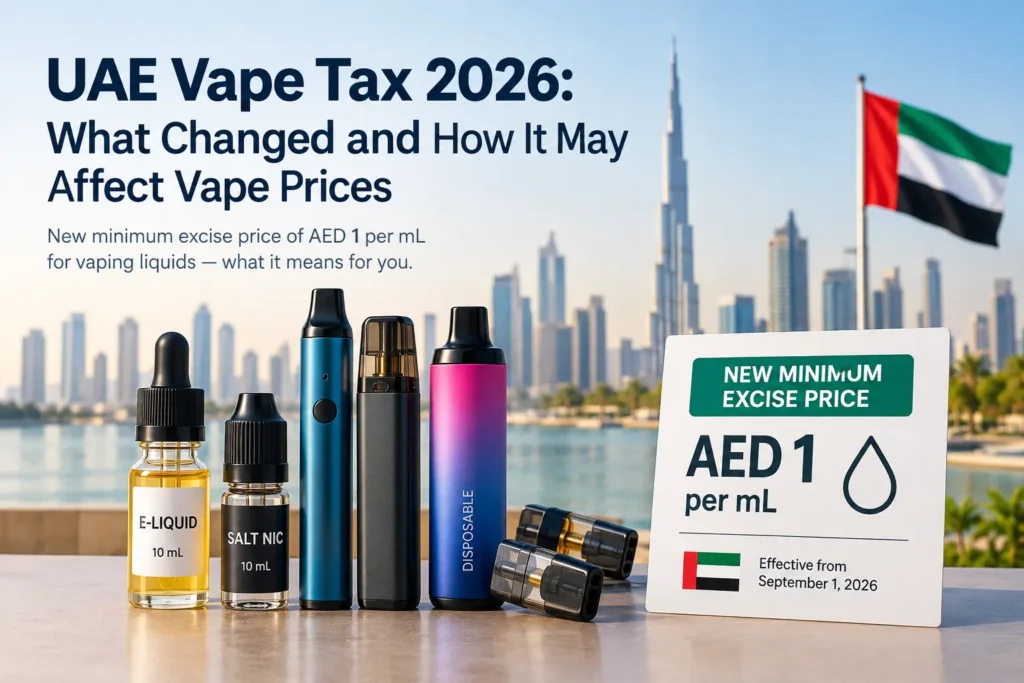
The UAE introduced a new minimum excise price for liquids used in electronic smoking devices and tools on September 1, 2026. Under the new decision, the minimum excise price for these liquids is AED 1 per milliliter.
The change is important because the UAE already applies excise tax to electronic smoking devices and their liquids. The new minimum price creates an additional benchmark for determining the excise price of affected liquids. For consumers, the most noticeable question is simple: could this change affect the prices of vaping products?
The answer may depend on the specific product, its liquid volume, its declared excise price and how businesses manage their pricing. Not every product will necessarily be affected in exactly the same way.
This guide explains what changed, which products may fall within the scope of the new rule and what UAE consumers should understand about the current situation.
What Changed in the UAE on September 1, 2026?
The UAE Ministry of Finance announced the introduction of a minimum excise price of AED 1 per mL for liquids used in electronic smoking devices and tools. The decision took effect on September 1, 2026.
The Ministry stated that the decision was introduced as part of efforts to strengthen the implementation of the UAE’s excise tax system and support compliance with the country’s tax legislation.
The new rule does not mean that every vape product will suddenly have the same retail price. Instead, it establishes a minimum excise price for the relevant liquids. The eventual consumer price of a product can still depend on several factors, including the product itself, supply costs and retailer pricing.
The UAE’s Federal Tax Authority lists both electronic smoking devices and the liquids used in them among goods subject to excise tax. The applicable excise tax rate for these categories is listed as 100% under the UAE excise tax framework.
What Does AED 1 Per mL Mean?
The new minimum excise price is based on the volume of liquid used in electronic smoking devices and tools.
In simple terms, the rule establishes a minimum value of AED 1 for each millilitre when determining the excise price of affected liquids.
For example, a product containing 10 mL of liquid would have a minimum excise price benchmark of AED 10 under this specific rule.
However, this does not automatically mean that the final retail price of the product will be AED 10 more. Excise tax calculations and retail prices are not the same thing, and the impact can vary depending on the product and the wider supply chain.
This distinction is important for consumers reading headlines about a “new vape tax.” The UAE already had an excise tax framework covering electronic smoking devices and their liquids. The September 2026 change specifically introduced a new minimum excise price for the relevant liquids.
Which Vape Products Could Be Affected?
The official wording applies to liquids used in electronic smoking devices and tools.
This can be relevant to different vaping product formats because liquids may be sold separately or contained within a device. However, consumers should avoid assuming that every device, pod or disposable product will be affected in exactly the same way.
Products in the wider vaping market can include:
- E-liquids
- Nicotine salt liquids
- Pre-filled vape pods
- Pod systems
- Disposable vape devices
The exact tax treatment of a particular product depends on how it is classified and how the relevant excise rules apply.
If you use refillable devices, you can explore available E-Liquids and Salt Nic options based on your device and personal requirements.
Users of closed-system devices can also browse Vape Pods and Pod Systems to understand the different product formats available.
Will Vape Prices Increase in the UAE?
It is possible that some products may experience price changes, but consumers should be careful about expecting a single, fixed increase across the entire market.
A retail price can be influenced by:
- The liquid volume within the product
- The applicable excise calculation
- Import and supply costs
- Distribution costs
- Existing inventory
- Brand pricing
- Retailer pricing decisions
The new minimum excise price may have a greater impact on products whose relevant excise-price calculations fall below the new AED 1-per-mL benchmark. Products already priced and taxed above the relevant minimum may not experience the same effect.
For that reason, it would be inaccurate to claim that all vape products in Dubai or the UAE will increase by a specific percentage or amount.
Consumers are likely to see the clearest picture by checking current product prices and comparing similar products by category, specifications and liquid capacity.
For example, you can compare different available options within the Disposable Vapes category or explore alternative device formats through Vape Kits.
Is This a New Tax on Vapes?
Not exactly.
The UAE already applies excise tax to electronic smoking devices and tools, as well as liquids used in these products. The Federal Tax Authority lists both categories as excise goods and states a 100% excise tax rate for them.
What changed in September 2026 was the introduction of a minimum excise price of AED 1 per mL for the relevant liquids.
This difference matters because the term “new vape tax” can create the impression that vaping products were previously outside the UAE’s excise tax system. That is not the case.
The September 2026 decision changes one part of the tax framework by setting a minimum excise-price benchmark for liquids used in electronic smoking devices and tools.
Why Did the UAE Introduce a Minimum Excise Price?
According to the Ministry of Finance, the decision is intended to support the effective implementation of excise tax and help ensure consistent standards across relevant categories of tobacco and electronic smoking products.
The Ministry also linked the decision to developments in the excise-goods market and the need to strengthen compliance with UAE tax legislation.
A minimum excise price can help establish a standard baseline for the tax treatment of affected products. This is particularly relevant in markets where products can be sold at widely different prices.
However, consumers should separate the official purpose of the tax decision from assumptions about future retail pricing. The official announcement establishes the new minimum price and its effective date; the precise retail effect may differ between individual products and sellers.
What Should Vape Consumers Check Before Buying?
The current changes make it even more useful for consumers to pay attention to product information rather than relying only on a product’s headline price.
Before choosing a vaping product, consider:
Product Type
Are you looking for a disposable device, pod system or refillable vape? Different product formats may have different costs and usage patterns.
Browse Disposable Vapes if you are exploring single-device formats, or look at Pod Systems for reusable devices designed to work with compatible pods.
Liquid Capacity
For products containing e-liquid, the liquid volume is one of the specifications worth checking. It can also help you compare products with different capacities.
Product Compatibility
If you use a pod system, make sure that replacement products are designed for your specific device. You can browse the available Vape Pods and review individual product details before making a selection.
Current Product Information
Prices, availability and product variants can change. Always review the current information on the individual product page rather than relying on outdated product descriptions or old social-media posts.
How Could the Change Affect the UAE Vape Market?
The full long-term market impact will take time to develop.
Businesses that import, distribute or sell affected products may need to consider the new minimum excise-price rules when reviewing their product pricing and compliance processes. Consumers may also notice that price differences between similar products become more important when comparing available options.
The market may also place greater emphasis on:
- Product specifications
- Liquid capacity
- Device format
- Current pricing
- Brand positioning
This makes informed product comparison more useful than simply searching for the lowest price.
Consumers looking at different device types can compare categories such as Vape Kits, Pod Systems and Disposable Vapes based on the format that best matches their needs.
Frequently Asked Questions
When did the new UAE minimum excise price take effect?
The UAE’s new minimum excise price for liquids used in electronic smoking devices and tools took effect on September 1, 2026.
What is the new minimum excise price?
The minimum excise price introduced by the UAE Ministry of Finance is AED 1 per millilitre for the relevant liquids.
Does this mean all vape prices will increase?
Not necessarily. The impact on a final retail price can depend on the product, its liquid volume, the applicable excise calculation and wider business costs.
Are vape products already subject to excise tax in the UAE?
The Federal Tax Authority lists electronic smoking devices and tools, as well as liquids used in them, as excise goods subject to the UAE’s excise tax framework.
Where can I compare different vape product types?
You can explore different formats through categories including Disposable Vapes, Pod Systems, Vape Pods and Vape Kits.
The Bottom Line
The UAE’s September 2026 vape tax change is not simply a blanket increase in the retail price of every vaping product. The key change is the introduction of a minimum excise price of AED 1 per mL for liquids used in electronic smoking devices and tools.
Because the UAE already applies excise tax to electronic smoking devices and their liquids, the new decision should be understood as an update to the existing excise-tax framework.
For consumers, the practical effect may vary from product to product. Checking the current price, liquid capacity and individual product specifications remains the best way to understand and compare available options.
As the UAE market adjusts to the new rules, this page may be updated when additional official guidance or relevant developments become available.
